Single-Bay or Multi-Bay Charging Dock for Shared Commercial Devices
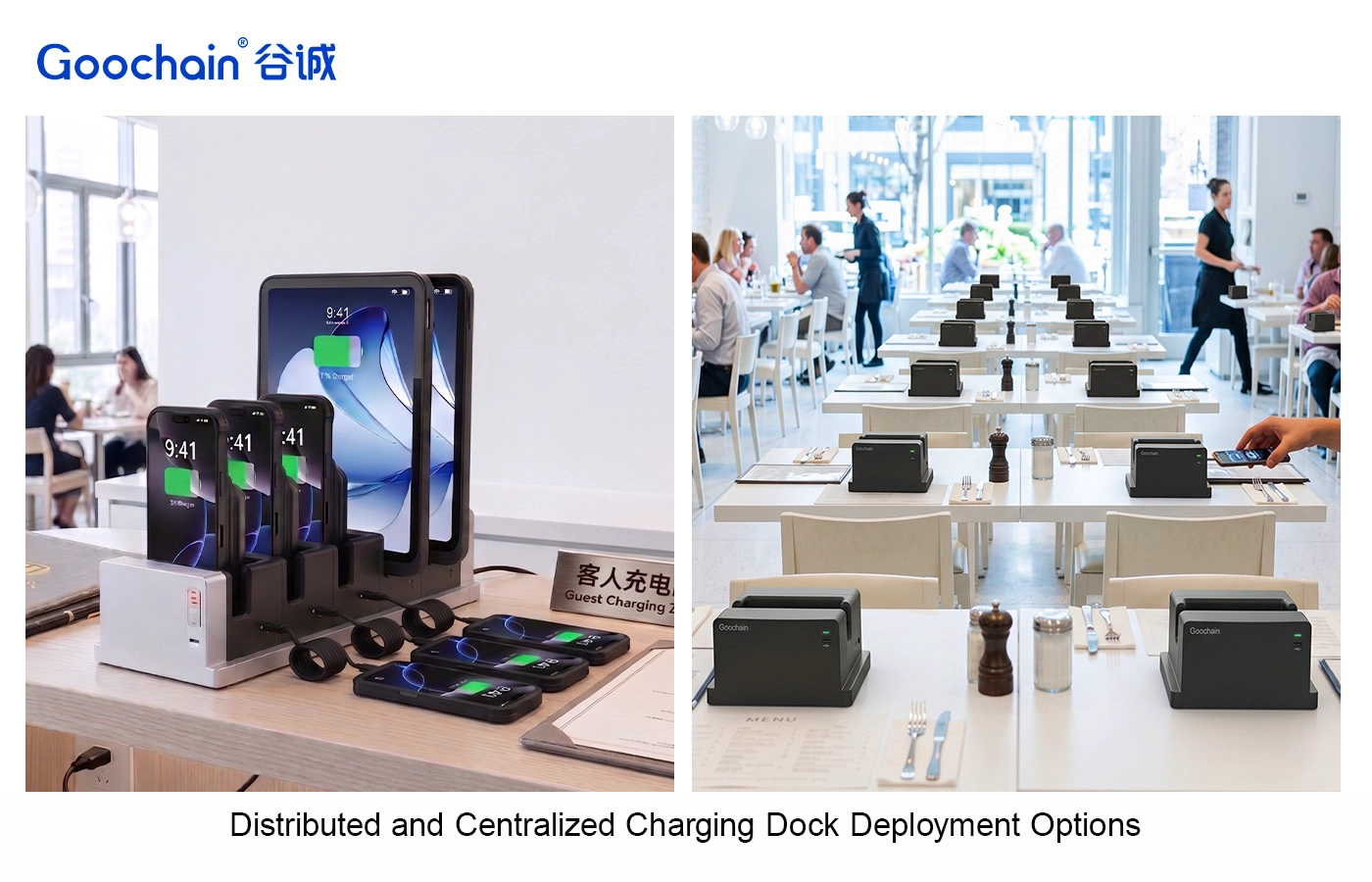
The best bay count is determined by where devices are returned, not by how many devices the company owns. A restaurant may place one dock at each service station, while a warehouse may return an entire scanner fleet to one shelf at the end of a shift.
Goochain uses the site workflow to decide whether the product should be a compact single dock, a five-bay station or a modular system that can be deployed in several layouts.
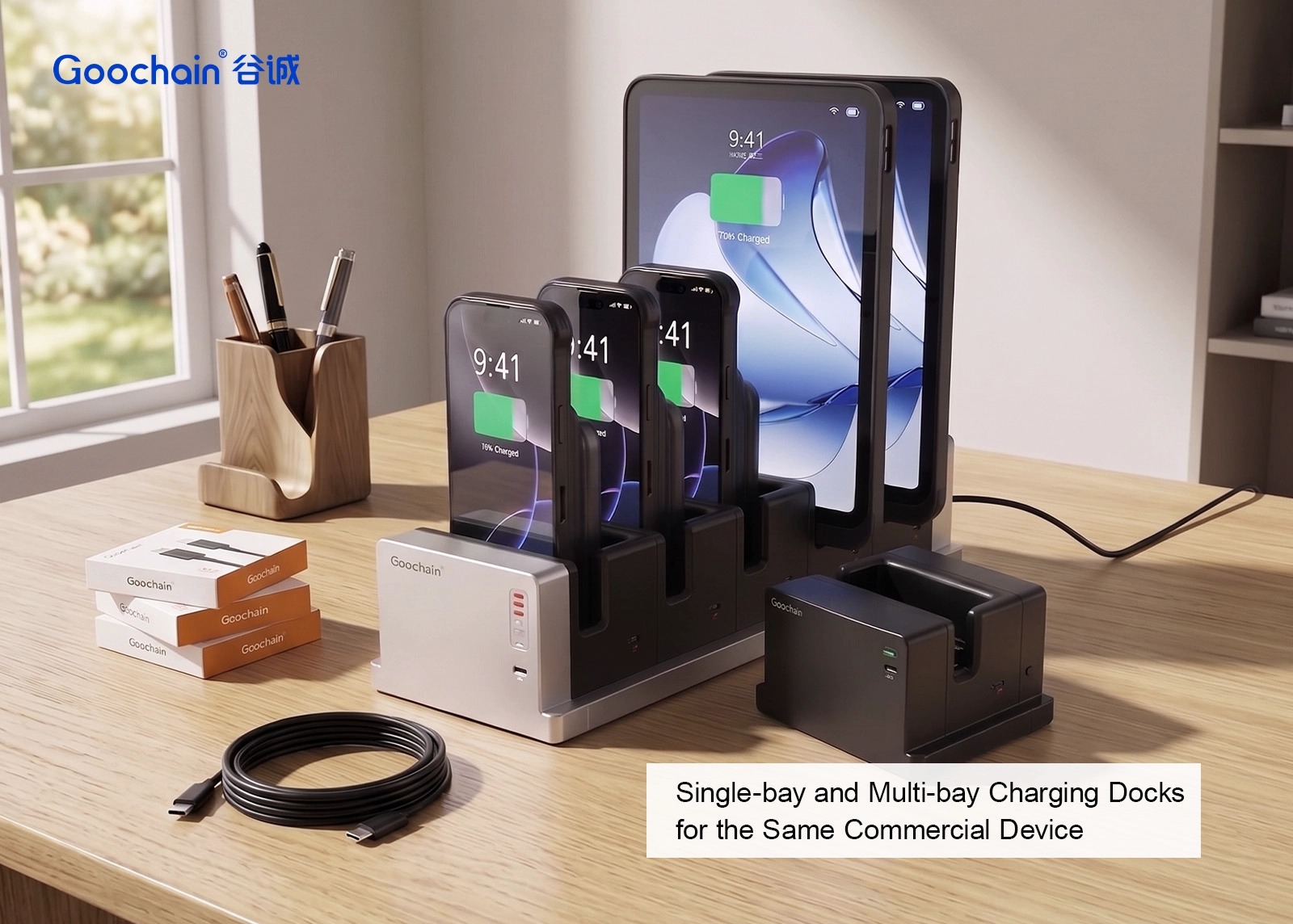
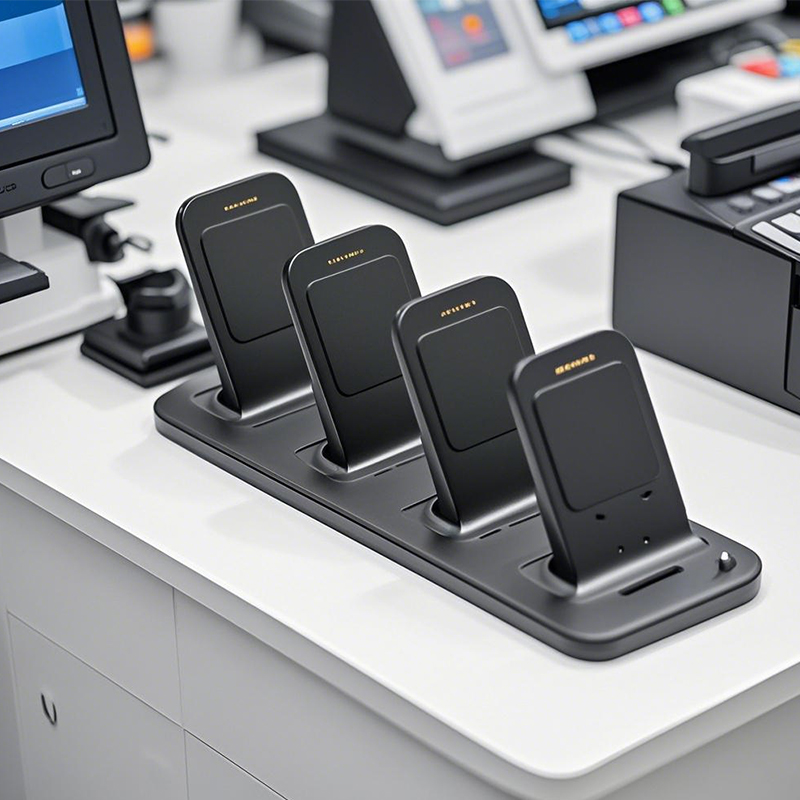
One dock per workstation gives each device a clear home and reduces competition for charging positions. It also spreads power adapters and cables across the site. Single docks work well when devices stay near an assigned operator or counter.
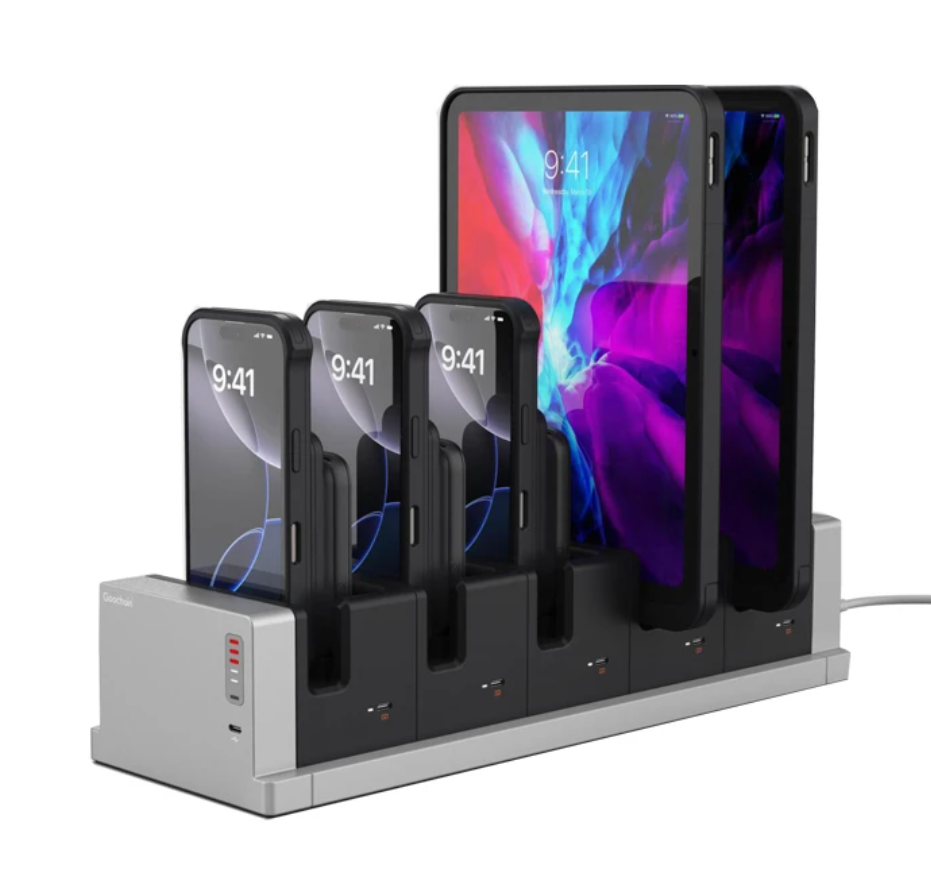
Multi-bay stations centralize fleet control
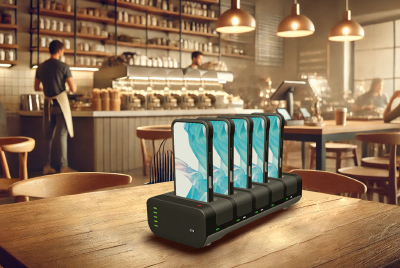
A multi-bay station organizes several devices and simplifies end-of-shift checks. The design must account for total power, heat, cable routing, bay spacing and service. A central station can become a bottleneck if the site has too few bays or staff have to walk far to return devices.
Use the same device interface where possible
A product family can share the case contact surface between single and multi-bay docks. This gives the customer flexibility without changing the mobile device. Goochain controls the contact datum and pin definition across the docking products.
Calculate deployment by location
List devices per site, peak charging time, available counter space, regional power adapters and spare-unit policy. That information is more useful than asking for a universal multi-port charger.
Talk to Goochain About Your Project
Share a typical site layout and device count with Goochain. We can compare distributed single-bay docks with centralized multi-bay stations and develop the common interface around the actual deployment.