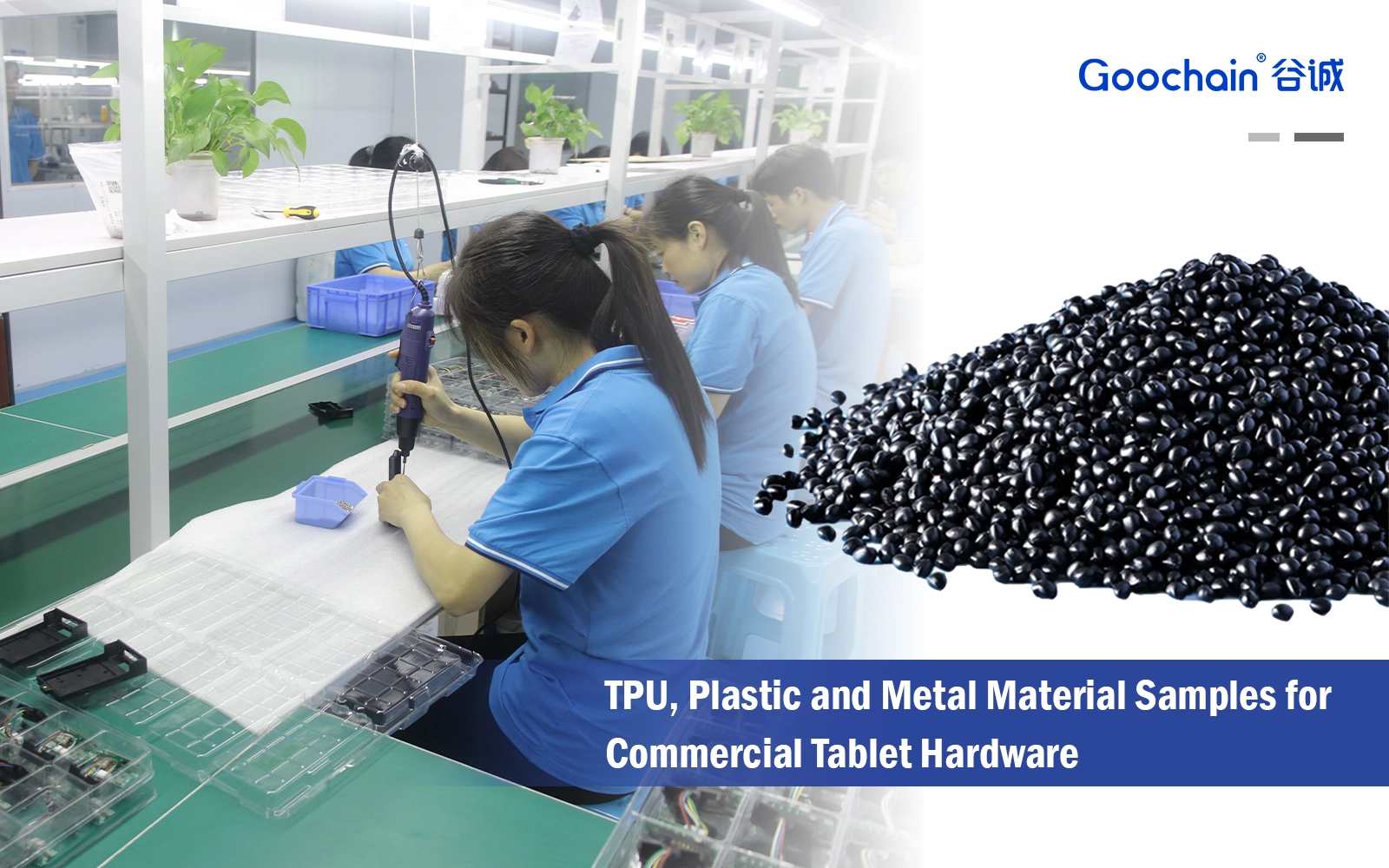
Material selection affects grip, impact behavior, wall thickness, tooling, finish, weight and assembly. It also affects what the product feels like after thousands of daily touches. The lowest material price does not always create the lowest finished-product cost.
Goochain selects materials after the device, use environment and production route are understood. TPU and ABS can work together in a handheld case, while metal may be more suitable for a stand base or high-load bracket.
TPU for grip and edge protection
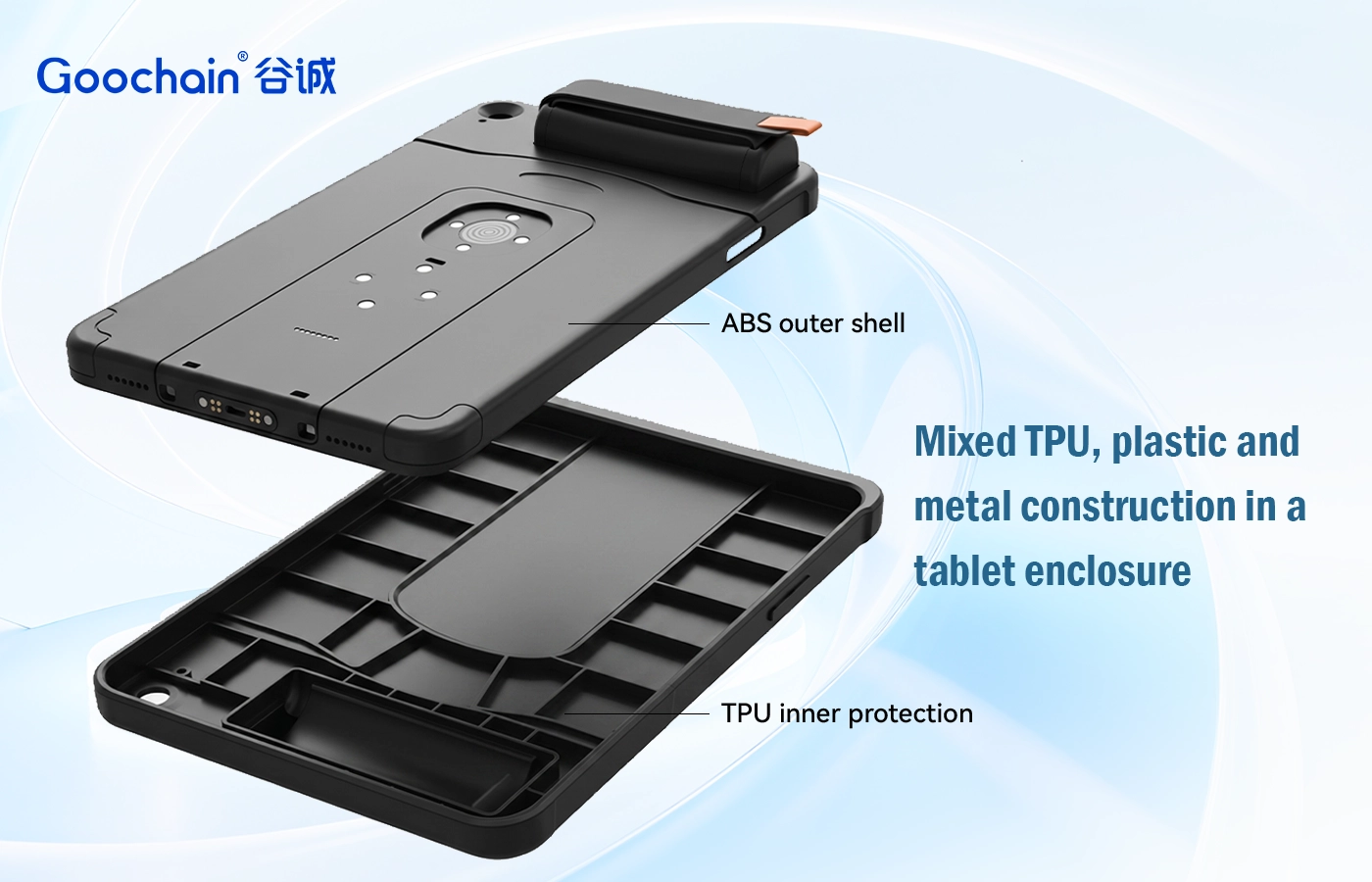
TPU can provide a softer hand feel, absorb impact around corners and support flexible retention features. Its hardness and wall design need to balance protection with assembly. Too soft can make docking inconsistent; too hard can reduce the benefit of the flexible layer.
ABS and PC/ABS for structured housings
ABS is widely used for molded commercial housings because it can form precise features and accept different textures and finishes. PC or PC/ABS directions may be considered where the project needs different impact, heat or flame-performance characteristics. The exact grade must be confirmed against the requirement instead of named only for marketing.
Metal for load, stability and finish
Aluminum or steel can support thin brackets, stable bases and high-load stand structures. Metal may add machining, forming, coating and assembly steps. It can also affect antennas or contact systems, so the surrounding device architecture must be reviewed.
Use mixed construction deliberately
Many strong commercial products combine materials: TPU around the device, ABS for the main shell, metal inserts at screw points and a weighted or formed metal base. Goochain reviews how these materials join, how tolerances stack and how the product can be disassembled for service.
Talk to Goochain About Your Project
Provide Goochain with the drop target, cleaning method, temperature range, appearance direction and expected volume. We can recommend a material structure tied to the actual product requirements rather than a generic material ranking.