Commercial hardware is judged not only by how it works on launch day, but by how quickly a site can recover when a cable, reader or tablet has to be replaced. A ten-minute service step repeated across hundreds of locations becomes a meaningful operating cost.
Goochain reviews service during product development. The objective is not to make every component user-removable; it is to define which parts can be replaced, by whom and with what tools.
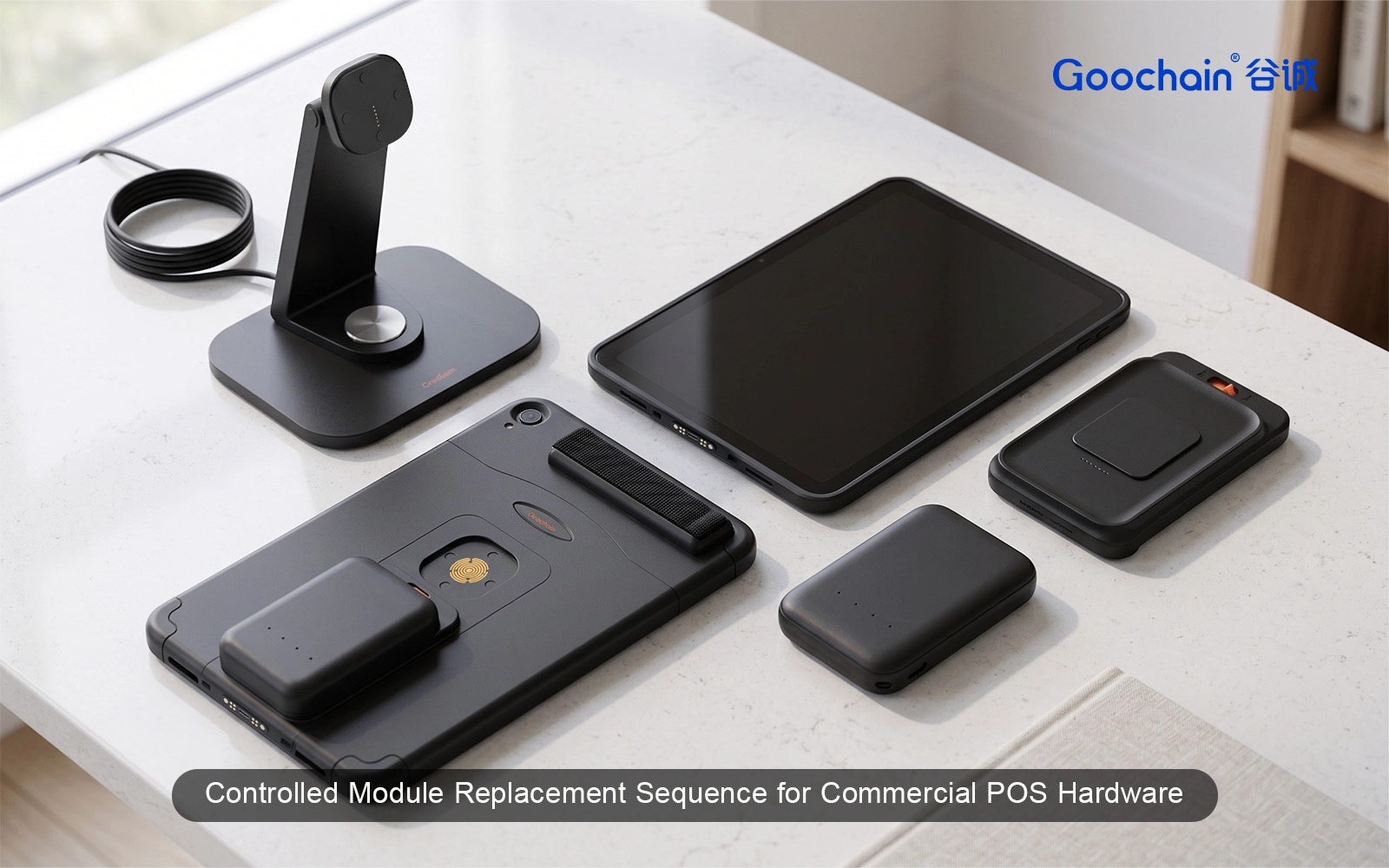
Separate high-change parts
Readers, short cables, contact boards and device inserts may change or wear earlier than the main enclosure or stand. A controlled module can allow these parts to be replaced without discarding the full assembly. The interface must remain strong enough for normal use.
Create a clear access sequence
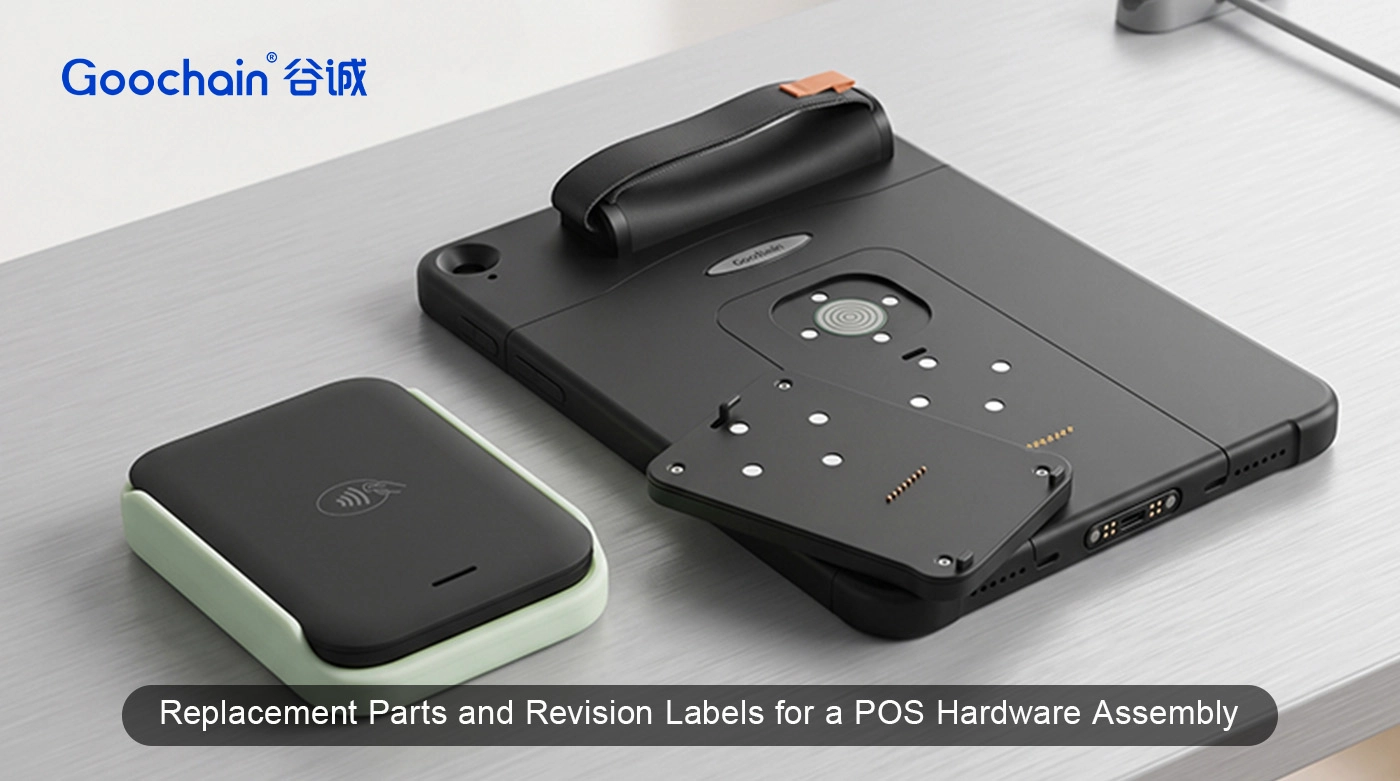
Service should follow an intentional path: isolate power, release the cover, disconnect the correct cable and remove the affected part. Fasteners should be reachable without creating a security opening for everyday users.
Identify parts and revisions
Labels, molded marks, keyed connectors and documented part numbers help technicians select the correct replacement. Goochain can control revision changes across molded parts, cables and PCBA so a new component is not mixed with an incompatible assembly.
Test the service procedure in the pilot build
A pilot run shows whether tools fit, connectors are reachable and instructions match the real assembly. Goochain records issues from the build and updates the drawing, fixture or work instruction before volume production.
Talk to Goochain About Your Project
Tell Goochain which components the customer expects to replace in the field and which should remain factory-service only. We can design the access, labels and module boundaries around that maintenance plan.