A magnetic tablet stand is compatible only when the complete mounting arrangement works with the intended device. Screen size alone is not enough: the tablet and case weight, attachment surface, ring position, mounting angle and stand stability all affect the result.
For an OEM or ODM order, evaluate a representative sample with the actual tablet and case before fixing the product specification. A magnet pull-force figure or a photo of a mounted device does not establish the working load of the complete stand.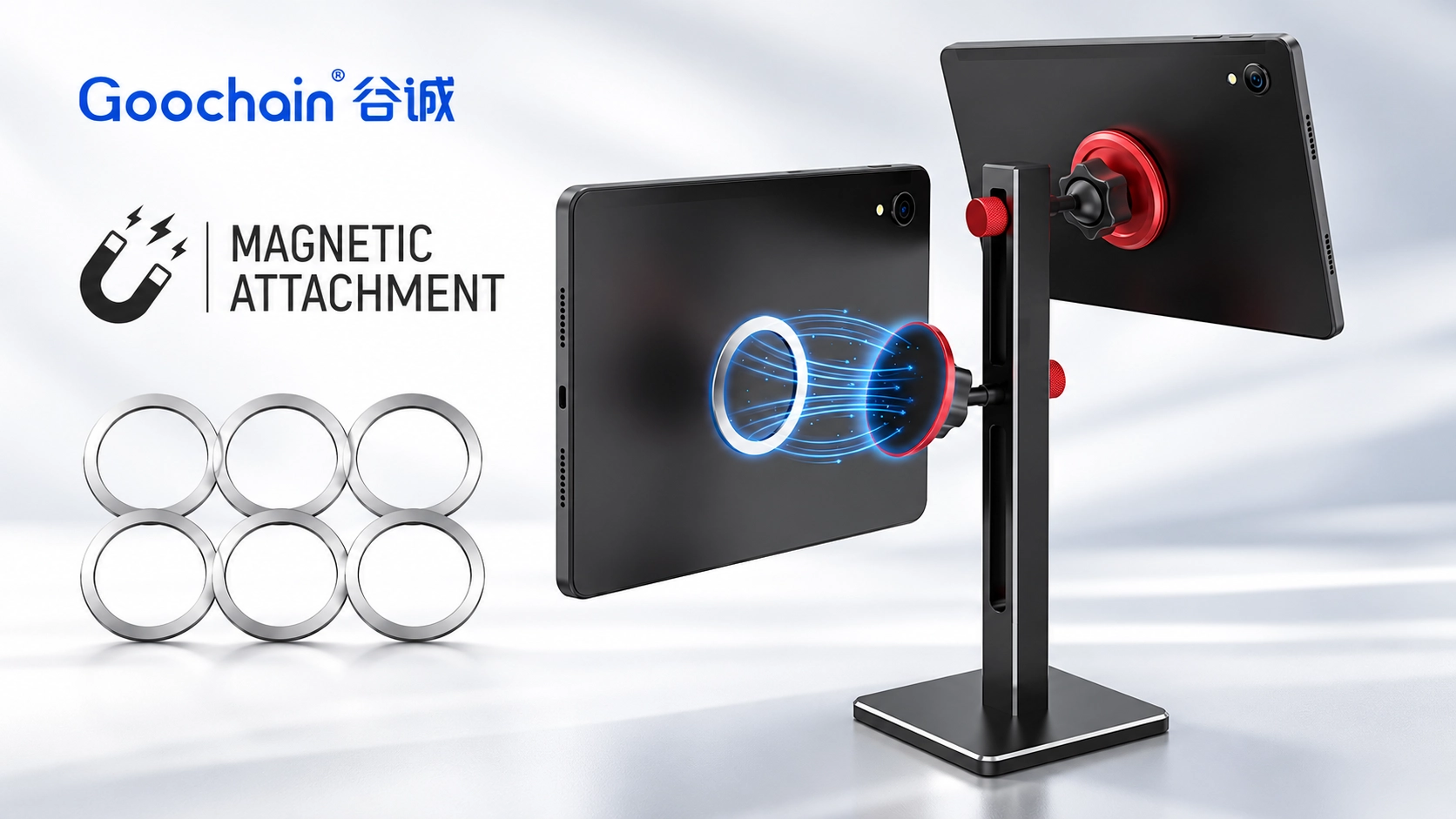
Record the device and case as one assembly
Record the exact tablet model, outside dimensions and total weight with its case and any attached accessories. Note the case material and surface texture, rear camera projection, detachable covers and the location of buttons, ports or charging features.
If the device needs an added attachment ring, assess the surface it will bond to. A ring attached to a removable case depends on that case remaining secure on the tablet. The holder can retain the ring while another part of the assembly still moves or separates.
Ask the supplier to identify the evaluated tablet and case combination. An iPad or Android compatibility statement should be supported by the relevant device model, attachment arrangement and operating conditions, rather than screen size alone.
Review the complete attachment path
The mounting path runs from the tablet through its case or rear attachment surface, the ring and adhesive where used, the magnetic head, the joint and column, and finally the base. Check each connection. Increasing magnetic attraction does not fix weak adhesive bonding, a loose case or an unstable base.
Choose the ring position with the screen weight and the holder geometry in mind. Keep it clear of camera areas, seams and features that need access. Follow the adhesive supplier’s instructions for surface preparation, application conditions and conditioning time before evaluating the bond. Use the actual production ring and adhesive in the approved sample.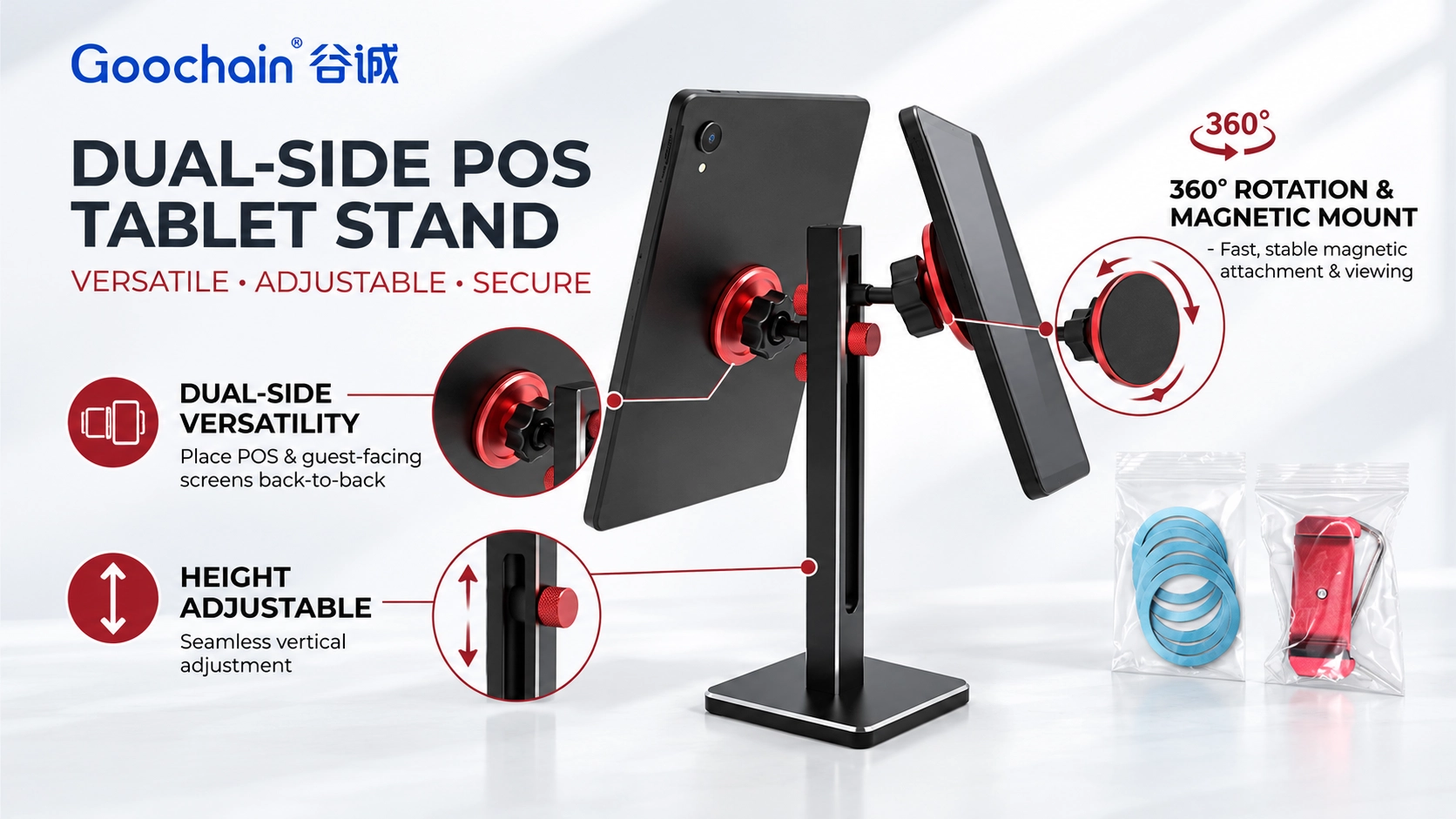
Separate static load from normal operating forces
A useful load assessment reflects how the holder will be used. Holding a tablet still in one position, tapping near a screen edge and removing the tablet from the magnetic head create different conditions. A dual-head stand also needs to be evaluated with one device removed.
| Check |
Representative setup |
What to observe |
| Static retention |
Actual tablet and case at the intended height and viewing angle |
Device slip, adhesive movement, joint drift or base movement |
| Touch operation |
Taps and swipes at the center and accessible screen edges |
Movement that interferes with operation or changes the screen position |
| Adjustment and rotation |
Move through the intended height and orientation range |
Clearance, knob retention and cable interference |
| Single-sided loading |
Dual-head stand with only one tablet attached |
Stability and usable positioning under an unbalanced load |
| Repeated attachment |
Remove and reattach using the intended handling method |
Changes in attachment, ring condition and joint behavior |
| Cleaning and environment |
Conditions and cleaning procedure specified for the application |
Changes in the case surface, adhesive interface or device retention |
Agree the duration, number of repetitions, sample quantity and pass criteria before running the checks. Establish the allowable working load from evaluation of the complete assembly. Record results for the tested configuration rather than transferring a rating from a magnet component to the whole stand.
Check cables and charging separately
Magnetic attachment describes how the device is retained. It does not, by itself, confirm Qi charging, MagSafe compatibility, pogo pin charging or data transfer. If the application needs power, define the electrical interface separately and check whether the ring and case affect the device’s existing charging arrangement.
For cabled operation, evaluate the connector and cable throughout screen adjustment. Cable tension should not pull the tablet away from the head or move the stand. If a fixed or locking installation is needed instead, compare the available countertop tablet mounting options before finalizing the sample.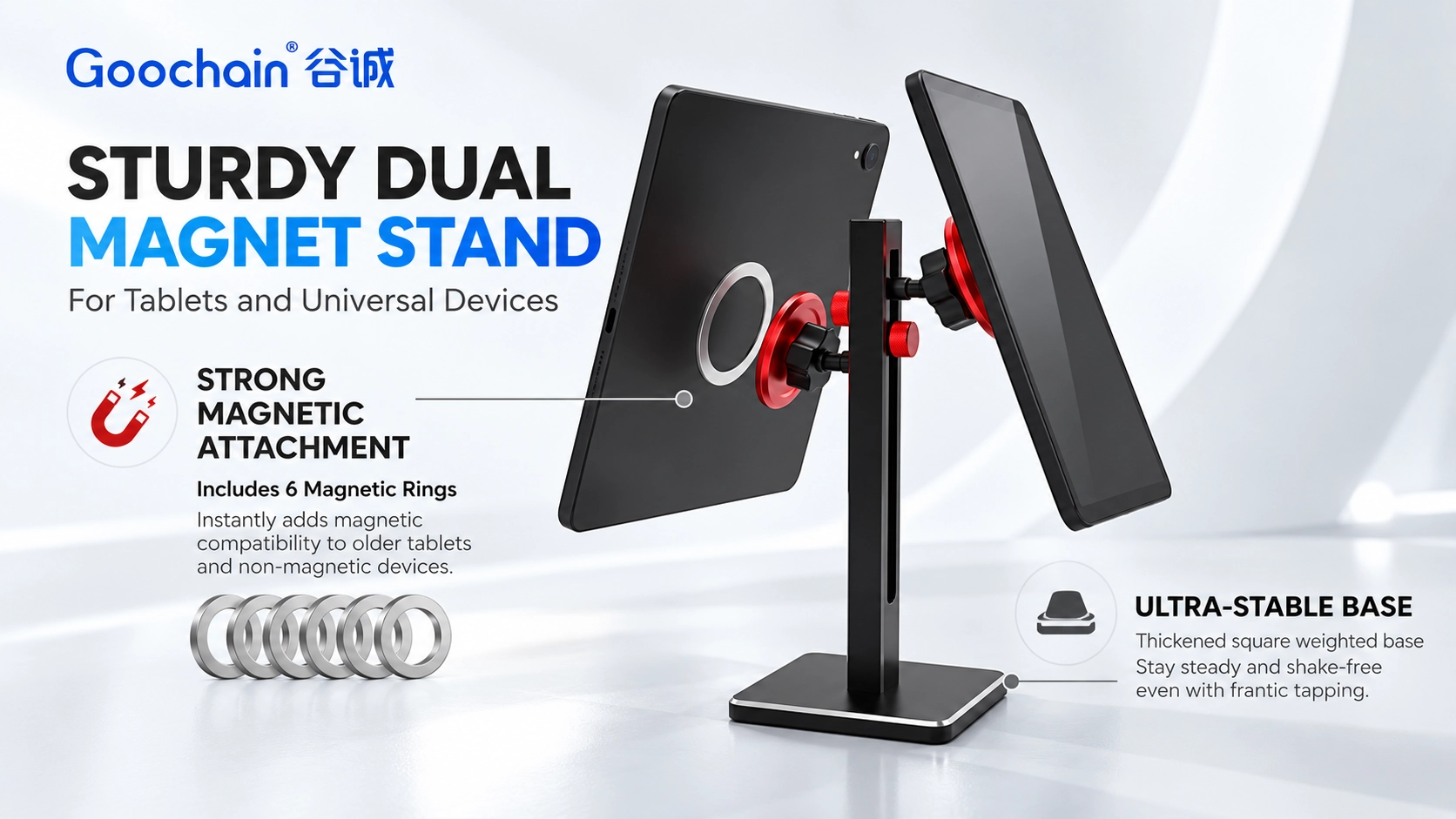
Turn the approved sample into a clear production specification
Once the device combination is approved, keep a record of the tablet and case models, ring and adhesive specification, ring position, head configuration, adjustment method and permitted operating range. Identify the checks needed for incoming parts, assembly and final inspection. Changes to the ring, adhesive, case or mounting geometry may require renewed evaluation.
The Goochain dual-sided magnetic tablet stand is one example of a product family where single-head, dual-head and phone-clamp configurations need different fit reviews. An approved dual-tablet sample should not automatically be used as evidence for every other device combination.
Custom mounting development with Goochain
Goochain is a manufacturer of POS accessories, tablet mounting hardware, charging solutions and custom cable assemblies based in Dongguan, China. Our OEM and ODM support includes requirements review, mechanical design, prototypes, tooling where required, assembly and project-defined production checks.
For magnetic tablet holder projects, the review can cover the attachment interface, column and base geometry, device clearance, finish, branding and packaging. Share the intended device or an initial concept to start the discussion. Test conditions and acceptance criteria are then agreed for the selected configuration.
Frequently asked questions
Can a magnetic tablet stand be used with a protective case?
It depends on the case construction, attachment surface, total weight and ring arrangement. Evaluate the exact tablet and case combination rather than assuming a thicker or thinner case will work.
Is magnet pull force the same as tablet load capacity?
No. Pull force describes a component under specified conditions. The usable stand configuration also depends on the attachment bond, case retention, head joint, geometry and base stability.
What information does Goochain need for an OEM fit review?
Provide the device and case models, total weight, attachment preference, intended height and viewing angle, operating environment and expected handling. These details help define the sample configuration and evaluation plan.